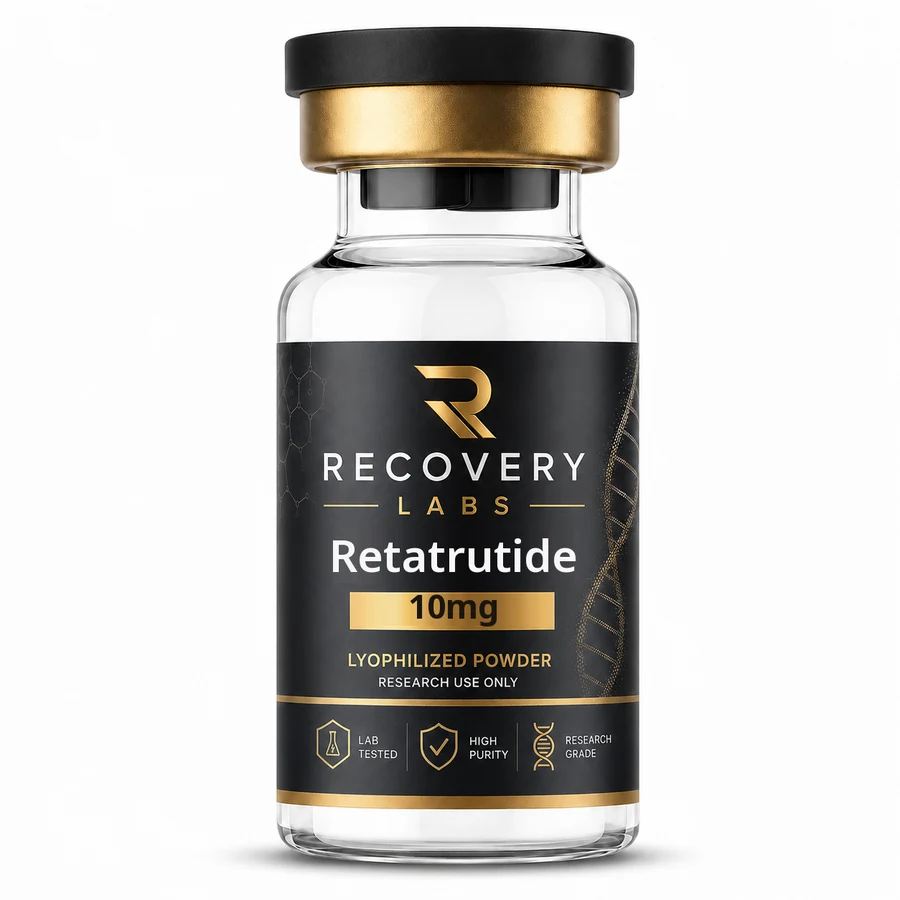
Retatrutide is the most requested triple-agonist reference material in Australia. Here is the exact evaluation sequence Recovery Labs uses on every incoming lot — and what you should demand from any supplier.
Retatrutide arrives in Australian labs with more hype attached to it than almost any other reference peptide, and hype is exactly what makes sourcing risky. A vial that looks identical across five different websites can vary by several percent in purity, carry a different counterion load, and come with a certificate that was never matched to the lot in the box.
Recovery Labs runs every retatrutide lot through the same four-stage intake before it is listed for sale in Australia. This article documents that sequence so you can run the same checks on anything you buy — from us or anyone else.
Stage one — identity before purity
Purity is meaningless if the molecule is wrong. Retatrutide is a 39-residue triple agonist engaging the GLP-1, GIP and glucagon receptors, and its LC-MS signature is distinctive. Identity confirmation comes first: exact mass within tolerance, expected fragmentation pattern, and no co-eluting analogue peak that would suggest a substituted backbone.
- LC-MS exact-mass match recorded against the reference standard, not a supplier claim.
- Retention time compared with a previously verified in-house lot.
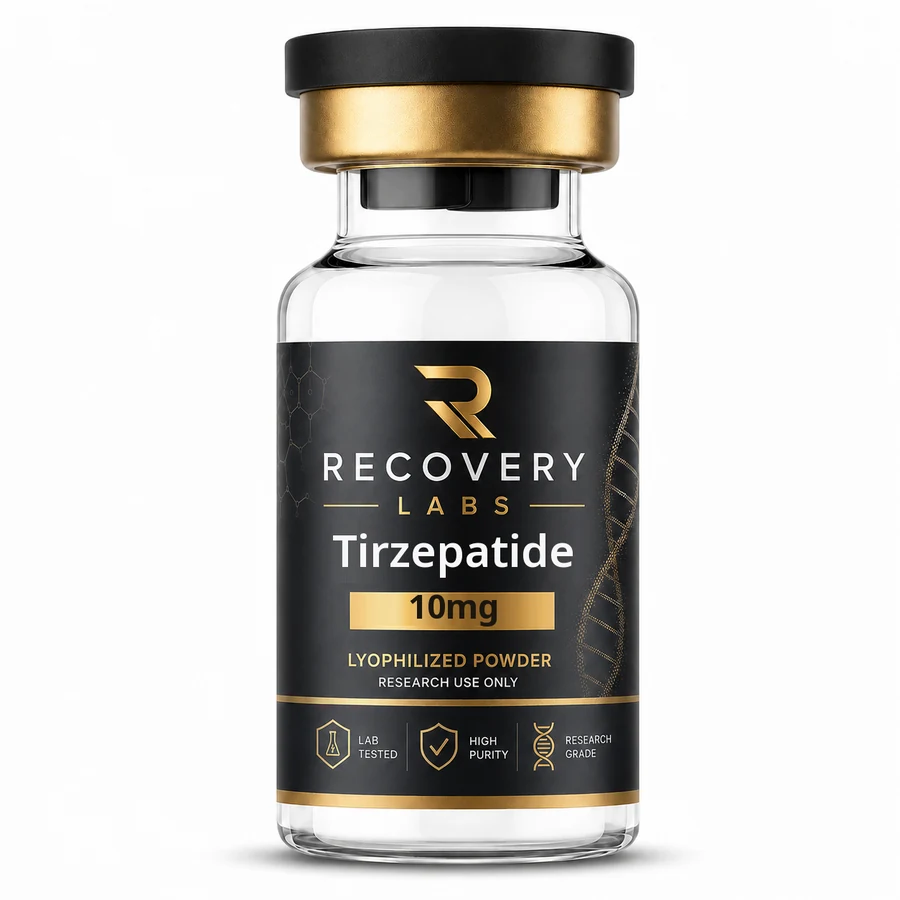
- Screening for tirzepatide contamination — the most common substitution seen in grey-market retatrutide.
- Visual check of the lyophilised cake: uniform, intact, no collapse or discolouration.
Stage two — HPLC purity and the release floor
Recovery Labs will not release retatrutide below a 99% HPLC release floor. That is a hard gate, not a target. Anything under it is quarantined and returned, regardless of how tight the supply window is. The reason is reproducibility — a 96% lot and a 99.8% lot behave differently in a dose-response curve, and a lab comparing results across two batches will chase a difference that came from the vial, not the experiment.
| Attribute | Recovery Labs release limit | Typical grey-market listing |
|---|---|---|
| HPLC purity | ≥ 99.0% | "98%+" unverified |
| Identity method | LC-MS exact mass | Often none |
| Batch-matched COA | Published, lot-linked | Generic PDF reused |
| Counterion disclosed | Yes | Rarely |
| Peptide content stated | Yes | Almost never |
Stage three — peptide content vs. label weight
This is the number most Australian buyers never ask for and the one that changes their maths the most. A 10 mg vial is 10 mg of lyophilised solid, not 10 mg of net peptide. Acetate or trifluoroacetate counterions plus residual water routinely account for 8–15% of that mass. If your protocol depends on net peptide, you need the content figure on the certificate, and you need it per lot.
Stage four — storage and dispatch conditions
Retatrutide is stable as a lyophilised powder but unforgiving once reconstituted. Recovery Labs holds stock in Australia at -20 °C, picks and packs in a temperature-controlled area, and dispatches insulated via Express Post so the vial spends hours in transit rather than weeks in a customs queue. Domestic holding is not a marketing line — it is the single largest variable in whether the material you receive still matches its certificate.
Questions Australian researchers ask us most
Is retatrutide legal to buy in Australia for research?
Retatrutide is supplied and sold in Australia strictly as a laboratory reference material for in-vitro research. It is not approved for human use and Recovery Labs does not supply it for that purpose. Buyers are responsible for holding any institutional or regulatory authorisation their work requires.
How long does retatrutide last once reconstituted?
Published stability references generally document reconstituted GLP-1 class peptides as usable for around 28–30 days at 2–8 °C when handled aseptically with bacteriostatic water. Lyophilised material stored at -20 °C is documented well beyond 24 months.
What vial sizes does Recovery Labs stock?
Retatrutide is stocked in 10 mg through 50 mg presentations, all held in Australia and dispatched the same business day on cleared payment before the daily cut-off.
How do I confirm the certificate belongs to my vial?
Match the lot ID printed on the vial label to the lot ID on the Recovery Labs Lab Results page. If those two strings do not match exactly, the certificate does not describe your material.