Two of the most-ordered repair peptides in Australia are almost always ordered together. This is the mechanistic reason why — plus the analytical differences that matter when you buy them.
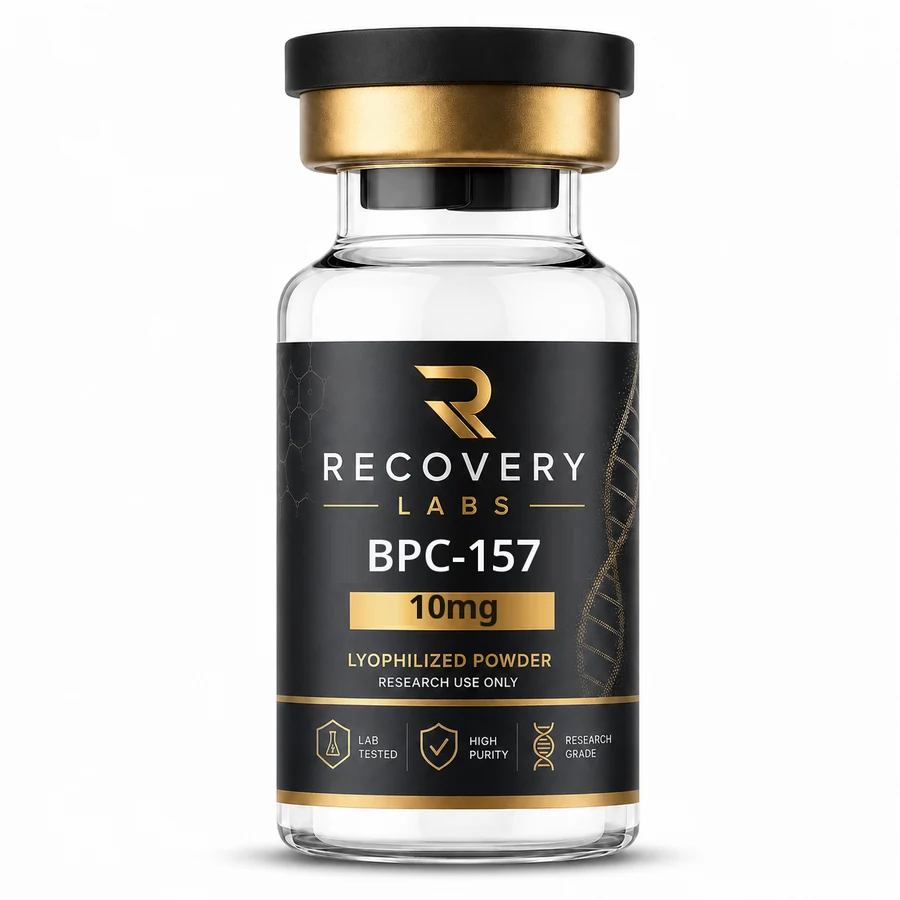
Look at any order log from an Australian tissue-repair lab and the same two line items keep appearing on the same invoice: BPC-157 and TB-500. That is not a marketing bundle. The two peptides act on separate arms of the same repair cascade, which is precisely why study designs pair them.
Different mechanisms, overlapping endpoints
BPC-157 is a 15-residue pentadecapeptide derived from a gastric protective protein sequence. The published in-vitro literature centres on angiogenic signalling and fibroblast migration. TB-500 is the synthetic active fragment of thymosin beta-4 and its documented activity is dominated by actin sequestration and cell motility.
| BPC-157 | TB-500 | |
|---|---|---|
| Length | 15 amino acids | 7 amino acids (Tβ4 fragment) |
| Primary documented axis | Angiogenic / VEGF-linked signalling | G-actin sequestration, cell migration |
| Typical assay endpoint | Tube formation, fibroblast migration | Scratch-closure rate, actin dynamics |
| Solubility profile | Readily water soluble | Readily water soluble |
| Common presentation | 5 mg / 10 mg lyophilised | 5 mg / 10 mg lyophilised |
Why the pairing complicates your analytics
Running both compounds in one design means two independent sources of batch variance. If you swap a BPC-157 lot mid-study while holding TB-500 constant, any shift in your results is unattributable. Recovery Labs recommends reserving matched lot quantities up front for the full duration of a study arm — we hold Australian stock specifically so that is possible without a three-week wait.
Blended vials versus separate vials
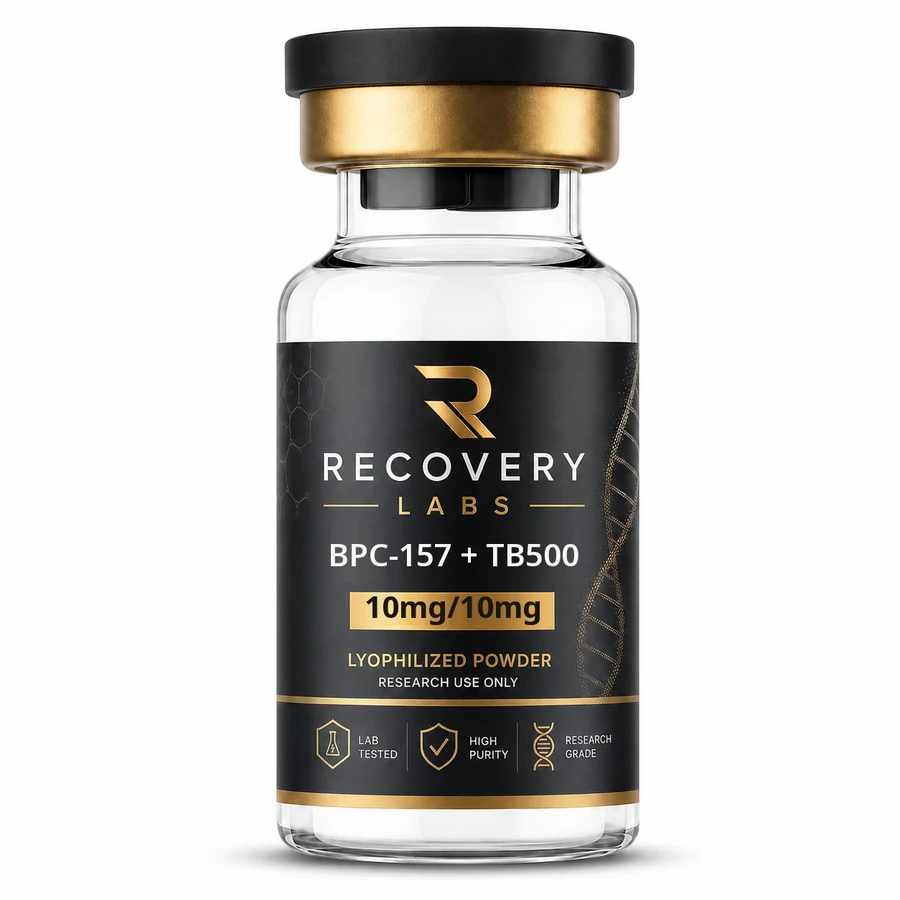
Pre-blended BPC-157 / TB-500 vials exist and Recovery Labs stocks one. They are convenient and they are also analytically blunt: you cannot independently vary the two concentrations, and a single purity figure across a blend tells you less than two separate certificates. For exploratory work, blends are fine. For anything you intend to publish or reproduce, buy them separately.
- Decide whether your design needs independent concentration control — if yes, separate vials.
- Reserve enough of each lot for every arm before starting.
- Record both lot IDs in your notebook alongside every data point.
- Reconstitute separately and mix at the bench if a combined condition is required.
Common questions
Can BPC-157 and TB-500 be reconstituted in the same vial?
They can be combined at the bench, but Recovery Labs recommends separate reconstitution so each concentration is independently known and each lot remains independently traceable.
Which has the longer documented stability window?
Both are documented as stable for roughly a month at 2–8 °C after reconstitution with bacteriostatic water. Lyophilised, both hold for years at -20 °C.
Do both lots get their own certificate?
Yes. Every Recovery Labs lot — including each component presentation — carries its own HPLC-MS certificate published against its printed lot ID.